By Liesl Cohn De León, 2024 CLLAS Graduate Grantee PhD Student in Anthropology
Since the 1980s, the Guatemalan Maya have settled in the US through transborder communities (Stephen, 2007) in search of a life free from violence, insecurity, limited opportunities, and low wages (Burrell, 2005). Some consider Maya Guatemalans in the US to be pressured to adapt to an environment that is predominantly Latino/Hispanic (Batz, 2014). However, while Mestizo Guatemalans tend to migrate to large cities to mingle with other Latinos, Guatemalan Mayans prefer to migrate to small cities or rural towns in search of ethnic and linguistic connections, thereby replicating their places of origin (Solares, 2016).
“I wondered how Maya migrant women of different generations and places of origin reconstitute their communities and collective and individual identities in Oregon and how memory has survived, changed, and fractured through migration.”
Transborder migrants are reshaping notions of territory and politics by developing innovative models of governance, education, and economic development while maintaining their cultures and languages across multiple territories (Stephen, 2007). I wondered how Maya migrant women of different generations and places of origin reconstitute their communities and collective and individual identities in Oregon and how memory has survived, changed, and fractured through migration. During my explorative research funded by CLLAS, I collected 20 oral histories of Maya migrant women and men living in Oregon (Newport and Corvallis)—14 women and six men, most of them Mam, and some Popti’ and Akateko, between 18 and 49 years old. I also made observations in Woodburn, Cottage Grove, Beaverton, and Hillsboro. Women play a significant role in maintaining the community’s social life. For example, they organize get-togethers with family and neighbors, primarily through church. However, they acknowledge that there are not as many activities as in Guatemala, and living here can feel isolating. To them, language is very important, so they continue to teach their children to speak their Mayan languages. Interestingly, in interethnic marriages, women often adopt their husband’s language, which is typically the language spoken at home.
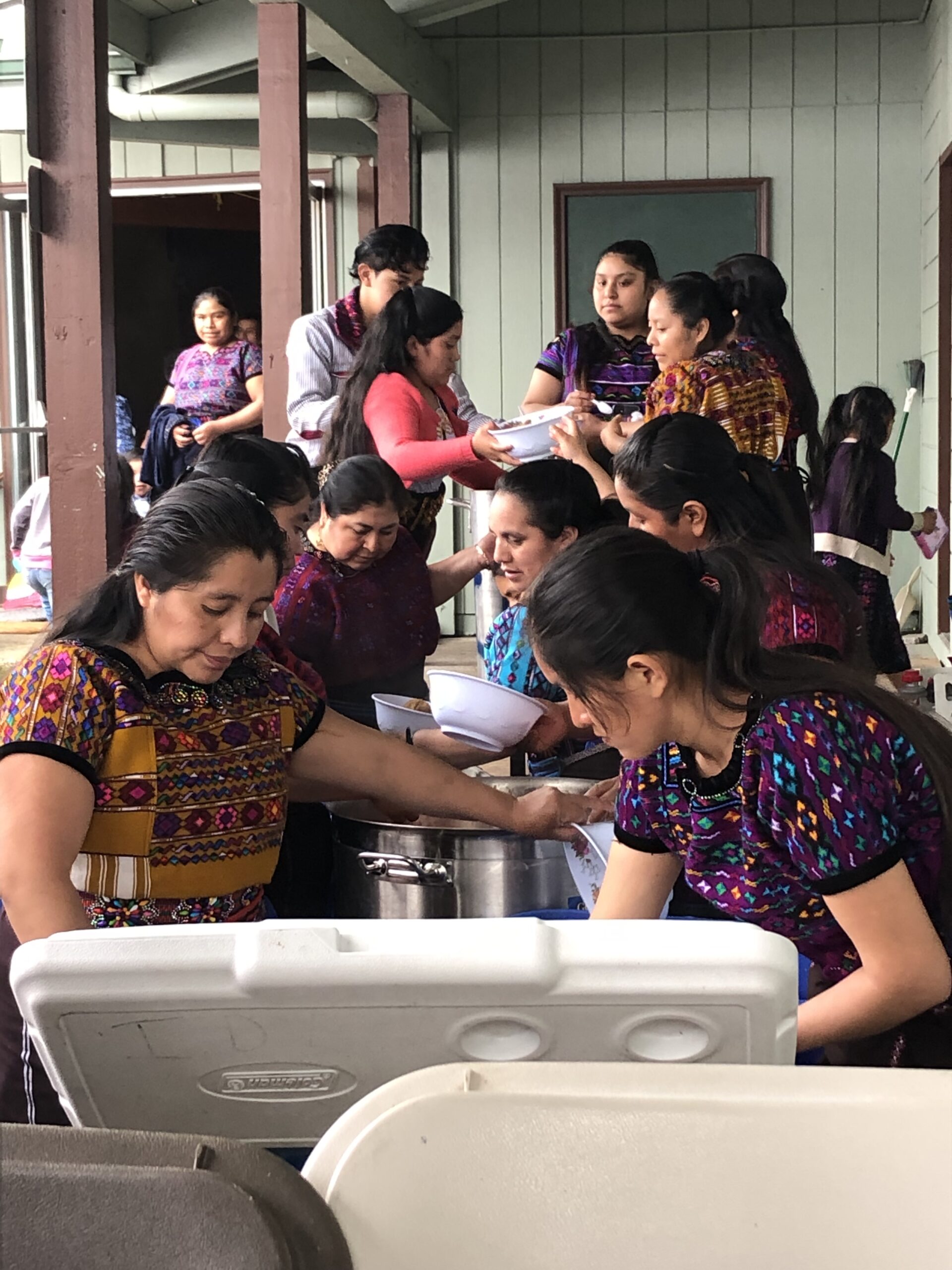
All the women still wear their traditional clothes, although most do not wear them daily, only on special days or special activities, because obtaining one here can be expensive. However, women still weave in their free time and teach their daughters. When they have land, they grow Mesoamerican seeds and herbs. Those without land purchase them from Guatemalan or Mexican stores or bring them from Guatemala. Thanks to this, they can continue to cook traditional Guatemalan food; however, they recognize that their diet has undergone some changes.
“Women play a significant role in maintaining the community’s social life.”
Many women work mostly as berry pickers in the fields. However, in their free time, they dedicate themselves to commerce, selling products from their homes, through social media, opening shops, or traveling to other towns to sell products at events. They sell the crops from their backyards or products they bring from Guatemala. During holidays, they cook and sell traditional Guatemalan food.
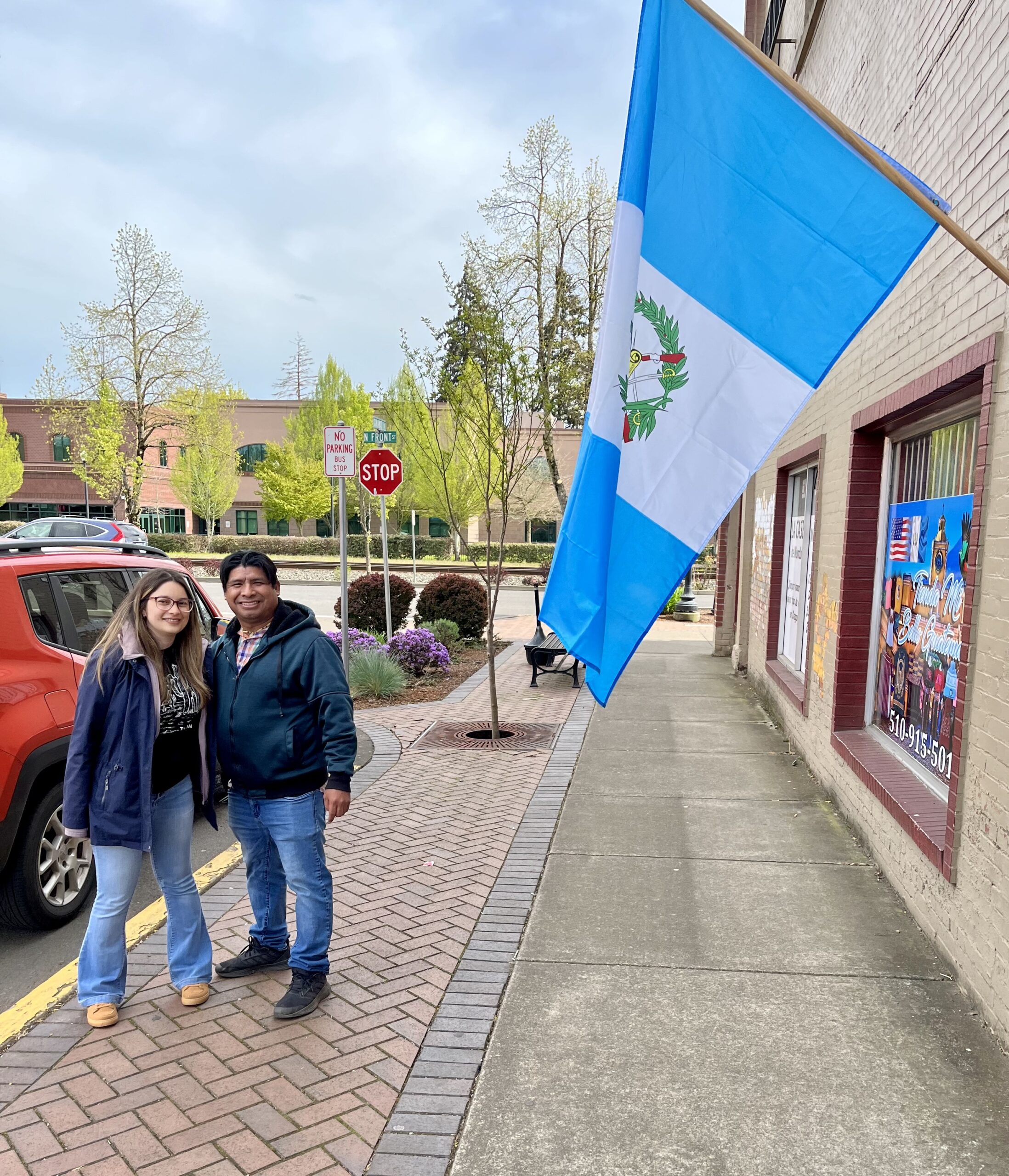
Although it may not seem like it, because they are everyday activities, commerce maintains communality and serves as a space of cultural resistance. In the future, I aim to examine the role of Guatemalan shops as a space where collective memory is preserved, constructed, and reimagined. Selling and importing products from Guatemala not only benefits the economy of Maya women but also helps maintain their culture and communal practices.
“Selling and importing products from Guatemala not only benefits the economy of Maya women but also helps maintain their culture and communal practices.”
Bibliography
Batz, Giovanni. 2014. “Maya Cultural Resistance in Los Angeles. The Recovery of Identity and Culture among Maya Youth”. Latin American Perspectives. Issue 196, Vo. 41, No. 3194-207. Burrell, Jennifer. 2005. “Migration and the Transnationalization of Fiesta Customs in Todos Santos Chuchumatán, Guatemala”. Latin American Perspectives. Vol 32, No. 5: 12-32. Solares, Pedro. 2016. “Ciudades Espejo”. August, 4th. Prensa Libre. https://www.prensalibre.com/opinion/ciudades-espejo/ Stephen, Lynn. 2007. Transborder Lives. Indigenous Oaxacans in Mexico, California, and Oregon. Duke University Press.
About Liesl Cohn De León